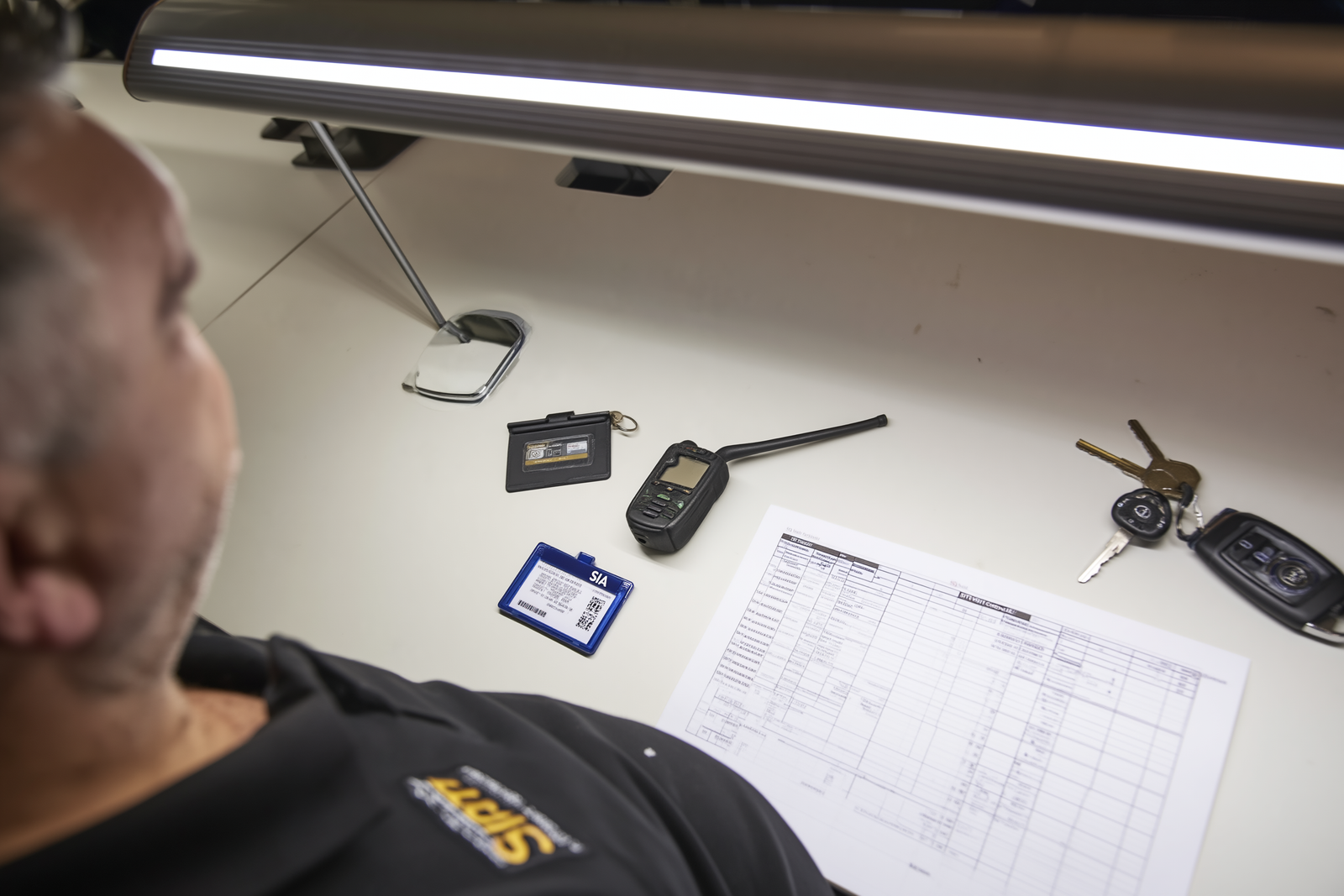
The work you do before you formally go to market has a direct impact on your valuation, the speed of the sale, and the quality of offers you receive. Most security business owners who achieve the best outcomes start preparing 6 to 12 months before they instruct a broker.
This is not about making your business look better than it is. It is about removing the friction that slows deals down, addressing the issues that make buyers nervous, and presenting your business clearly so that its genuine strengths, particularly your recurring revenue and your accreditation, come through.
1. Get Your Accreditations Current and Clean
Accreditation is one of the first things a buyer checks, because it underpins tender eligibility, insurance, and self-certification. A business holding current approvals is a lower-risk, more attractive acquisition than an unaccredited operator, who tends to attract a discount to cover re-certification cost and lost contract eligibility.
What to do
- Confirm your SIA Approved Contractor Scheme (ACS) status is current, with no outstanding conditions, for every licensable service you supply
- For electronic security work, verify your NSI Gold (or NSI Silver) or SSAIB certification is in date and that your next audit will not fall awkwardly across the likely sale timeline
- Make sure you are operating to the relevant EN standards, including EN 50131 for intruder and hold-up alarms, EN 50132 for CCTV and video surveillance, EN 50136 for alarm transmission, and EN 50518 if you run a monitoring or alarm receiving centre
- If you hold ISO 9001 or other scheme memberships, confirm they are current and that the supporting documentation is accessible
2. Document Your Monitoring Contract Book and Recurring Revenue
Recurring monitoring revenue (RMR) is the single most important value driver in electronic security. A book of monitored or ARC-connected accounts represents contracted, predictable income that arrives without new selling, and it is what separates a premium business from a lower-multiple operation. Buyers will want to understand it in detail.
What to do
- Build a schedule of every monitoring, maintenance, and service contract: client, monthly value, start and renewal dates, notice periods, and whether the contract can be transferred to a new owner
- Separate genuinely recurring income (monitoring, planned maintenance, managed services) from one-off install and project revenue in your reporting
- Track attrition: how many accounts you lose each year and why. Low, stable attrition supports a stronger valuation
- Note client concentration. A diverse base across retail, commercial, and public sector is lower risk than a book that leans on one or two large accounts
3. Bring Contracts and TUPE Position into Order
For manned guarding in particular, value sits in stable, transferable contracts and a clear staffing position. Buyers pay a premium for clean, long-term commercial contracts and clarity on how staff transfer under TUPE. Uncertainty here is one of the most common reasons a deal slows down.
What to do
- Schedule all commercial contracts with their value, term, renewal dates, and any change-of-control or assignment clauses
- Identify which contracts renew or come up for re-tender during the likely sale period, and address any that are overdue for a formal renewal
- Map your TUPE position: which staff transfer with which contracts, their length of service, and any continuity-of-employment considerations
- Resolve any contracts running on expired terms or informal arrangements, as these create avoidable buyer questions
4. Organise Workforce Licensing and Vetting Records
Your licensed, vetted, and retained workforce is a core part of what a buyer is acquiring, and it directly reduces owner dependency. Complete records demonstrate the depth and compliance of your team and shorten due diligence.
What to do
- Prepare a register of every operative's SIA licence, including type (door supervision, security guarding, CCTV public space surveillance, close protection, key holding) and expiry date
- Document BS 7858 security screening and vetting for all staff working in secure environments, with renewal dates clearly recorded
- Record specialist competencies and training: ARC operator training, systems engineering certifications, first aid, and any sector-specific qualifications
- Capture supervisory structure and rota cover so a buyer can see the business runs without daily input from you
5. Confirm Systems Compliance and Signalling Readiness
Technical compliance is a real due-diligence point in electronic security. With the analogue PSTN telephone network due to switch off, legacy alarms still signalling over copper lines will fail once the line migrates, so buyers want to know your installed base is ready.
What to do
- Audit your monitored estate and identify any accounts still signalling over PSTN copper lines rather than IP or dual-path signalling
- Plan and, where possible, begin the migration of those accounts to IP or cellular signalling ahead of the switch-off, as this both protects continuity and creates additional service revenue
- Keep maintenance and service records, commissioning certificates, and as-fitted documentation organised and accessible for your installed systems
- Confirm your equipment and installation practice meet the current EN and PD 6662 standards a buyer's technical adviser will expect
6. Reduce Owner Dependency and Clean Up Financials
Buyers will scrutinise your accounts and assess how much the business depends on you personally. Margins in guarding are thin, with wages forming the bulk of cost, so clear financials and a business that runs without you both reduce negotiation friction and support a stronger outcome.
What to do
- Separate personal expenses from business expenses. If you run personal costs through the company, buyers will discount your profitability
- Prepare a schedule of add-backs: owner salary, non-recurring expenses, and one-off costs, so your true earnings are visible
- Show the split clearly between recurring monitoring and maintenance revenue and one-off install or project revenue
- Strengthen your second line of management so client relationships, rostering, and operations do not rest solely with you
- Create an asset and equipment inventory with condition notes, lease terms, and replacement timelines, and address any deferred capital expenditure
When to Start
Ideally, begin preparation 12 months before you plan to go to market. This gives you time to address accreditation renewals, migrate any remaining PSTN-signalled accounts, formalise contract and TUPE documentation, and update licensing and vetting records without rushing. If you are considering selling within the next 6 months, start now with the highest-impact items: current accreditation, a documented monitoring contract book, and clean financials.
If you are not sure whether the timing is right, a confidential conversation with a sector specialist can help you understand where your business sits and what, if anything, you should address before going to market.
Pre-Sale Readiness Checklist
- SIA ACS status current, no outstanding conditions
- NSI Gold or SSAIB certification in date, next audit timed sensibly
- Operating to EN 50131 / 50132 / 50136 / 50518 as applicable
- Monitoring contract book scheduled with values, renewals, and attrition
- Recurring revenue separated from one-off install revenue in reporting
- Commercial contracts and TUPE position documented and transferable
- SIA licence register complete with expiry dates
- BS 7858 vetting records complete and current for all staff
- PSTN-signalled accounts identified and migration to IP under way
- Last 3 years of accounts prepared, with add-backs schedule
- Second line of management in place to reduce owner dependency
- Equipment and asset inventory complete with condition notes
- Outstanding disputes or compliance issues resolved
Not Sure Where to Start?
A confidential conversation can help you understand what preparation would have the biggest impact on your valuation. No obligation.
Request a Free Valuation